
March 20, 2026 - PBS News Hour full episode
3/20/2026 | 57m 46sVideo has Closed Captions
March 20, 2026 - PBS News Hour full episode
Friday on the News Hour, President Trump lashes out at NATO allies for not helping to secure the Strait of Hormuz as Iran continues to strike oil and gas facilities in the region. A wide-ranging conversation with New York City Mayor Zohran Mamdani. Plus, despite the president's vow to revive manufacturing, we explore why finding a factory job has become so difficult in the U.S.
Problems playing video? | Closed Captioning Feedback
Problems playing video? | Closed Captioning Feedback
Major corporate funding for the PBS News Hour is provided by BDO, BNSF, Consumer Cellular, American Cruise Lines, and Raymond James. Funding for the PBS NewsHour Weekend is provided by...
Support provided by:

March 20, 2026 - PBS News Hour full episode
3/20/2026 | 57m 46sVideo has Closed Captions
Friday on the News Hour, President Trump lashes out at NATO allies for not helping to secure the Strait of Hormuz as Iran continues to strike oil and gas facilities in the region. A wide-ranging conversation with New York City Mayor Zohran Mamdani. Plus, despite the president's vow to revive manufacturing, we explore why finding a factory job has become so difficult in the U.S.
Problems playing video? | Closed Captioning Feedback
How to Watch PBS News Hour
PBS News Hour is available to stream on pbs.org and the free PBS App, available on iPhone, Apple TV, Android TV, Android smartphones, Amazon Fire TV, Amazon Fire Tablet, Roku, Samsung Smart TV, and Vizio.
Providing Support for PBS.org
Learn Moreabout PBS online sponsorshipWILLIAM BRANGHAM: Good evening.
I'm William# Brangham.
Amna Nawaz and Geoff Bennett are away.
On the "News Hour" tonight: President Trump# lashes out at NATO allies for not helping to## secure the Strait of Hormuz, as Iran continues# to strike oil and gas facilities in the region.
A wide-ranging conversation with# New York City Mayor Zohran Mamdani.
ZOHRAN MAMDANI (D), Mayor of New York City:# We believe that a structural crisis deserves## structural solutions, and that comes from# taxing the wealthiest a little bit more.
WILLIAM BRANGHAM: And despite the# president's vow to revive manufacturing,## we explore why finding a factory job# has become so difficult in the U.S.
(BREAK) WILLIAM BRANGHAM: Welcome to the "News Hour."
President Trump said today that the United# States was not interested in a ceas.. Iran because, from a military standpoint, he said# Iran was finished.
Late today, Trump said on TRUTH## Social that -- quote -- "We are getting very close# to meeting our objectives as we consider winding## down our great military efforts in the Middle East# with respect to the terrorist regime of Iran."
Meanwhile, Israel and the United States continue# to attack Iran today, hitting the same kinds## of targets they have struck throughout this# campaign.
And Iran continued to strike back,## with missiles and drones landing in Israel and on# oil and gas facilities across the Persian Gulf.
White House correspondent# Liz Landers has the latest.
LIZ LANDERS: Today, in the Holy Land,## its holy city bombed.
Iran today struck# the ancient Old Quarter of Jerusalem,## a missile landing only a few hundred feet# from the Al-Aqsa Mosque and the Western Wall,## places of prayer sacred to billions, as further# Iranian attacks hit the city of Rehovot in the## country's center, killing 15 people nationwide,# as the war's casualty rate continues to grow.
Iran is threatening to keep up the fight,# its Revolutionary Guard today releasing a## statement announcing that the embattled regime# is continuing to produce missiles and stockpiles## are high, having again today struck Kuwait's# Al-Ahmadi and Mina Abdullah oil refineries,## forcing both to shut down, as the# price of gas inches up even higher.
A barrel of Brent crude oil today peaked at# $111.
With the war now entering its fourth week,## Iran has heavily damaged many petroleum# facilities and other targets in the region,## as the new supreme leader, Ayatollah Mojtaba# Khamenei, today released a statement on the eve## of Nowruz vowing to continue the battle and urging# the nation to stay steadfast in the face of war.
In Tehran, mourners gathered to pay# to continue Intelligence Minister## Esmail Khatib killed Wednesday by Israeli fire.
MAN (through translator): We have come to# say that no matter how much you kill us,## we become more awake, more alert.
We will# not back down.
We will not abandon the## streets.
We will not abandon the front# line.
Death to America.
Death to Israel.
LIZ LANDERS: Fifteen senior# IRGC government officials## have now been killed since the start of the war.
President Donald Trump touching upon these# regime losses as grounds to continue the war.
DONALD TRUMP, President of the United# States: You don't do a cease-fire when## you're literally obliterating the other side.# They don't have a navy.
They don't ha.. force.
They don't have any equipment.
They# don't have any spotters.
They don't have## anti-aircraft.
They don't have radar.
And their# leaders have all been killed at every level.
LIZ LANDERS: The U.S.
today continued its campaign# targeting Iran's navy and drone capabilities in## order to open the Strait of Hormuz, as President# Trump today criticized NATO countries for not## helping in the effort, writing on TRUTH Social# that the nations -- quote -- ":complain about## the high oil prices they are forced to pay, but# don't want to help open the Strait of Hormuz,## a simple military maneuver that is the# single reason for the high oil prices,## so easy for them to do with so little# risk.
Cowards.
And we will remember."
As the strait remains in the war's# choke hold, seven NATO countries## today issued a statement condemning Iran's# attacks.
Britain, France, Germany, Italy,## the Netherlands, Japan and Canada penned# the statement, saying that they were ready## to -- quote -- "contribute to appropriate# efforts to ensure safe passage through the## strait.
We welcome the commitment of nations# who are engaged in preparatory planning."
But French President Emmanuel Macron# expressed doubt in joining the war## after European nations met in Brussels today.
EMMANUEL MACRON, French President# (through translator): I have not## heard anyone here expres.. and I do not believe that taking part# in an escalation, should one occur,## would in any way resolve the international# situation or its consequences for our economies.
LIZ LANDERS: That concern for the war's# economic fallout shared by some Americans.
ARIADNE BLACKMON, Houston Resident: It's very# disheartening, all the lives that are lost,## and also just the fate of the economy in general.
LIZ LANDERS: But the president's base remains# supportive of the military intervention in Iran,## according to a new Politico poll out Friday;# 70 percent of the president's 2024 voters## support the strikes last month, with 53# percent of self-identified MAGA voters## saying they back the military moves because# they trust Trump to do the right thing,## though more than half of Americans overall do# not support the war, according to several polls.
Meanwhile, on the streets of Beirut,# hundreds of thousands of Lebanese## displaced by Israeli attacks, now greet Eid,# meant to be a time of celebration and peace,## homeless and in the rain; 33-year-old# Samah Hjola was forced out of her home## in Beirut's southern suburbs.
She now# lives in a minibus with her two children.
SAMAH HJOLA, Displaced Lebanese# Mother (through translator):## This Eid is certainly different from the Eid# befo.. We were at home.
My children had new clothes# for the Eid, and their lives were, of course,## different.
Everything is difficult.# There's nothing that isn't difficult.
LIZ LANDERS: And while the# adults put on a brave face## this holiday for the nation's children,# the destruction and loss is everywhere.
For the "PBS News Hour," I'm Liz Landers.
WILLIAM BRANGHAM: We start today's# other headlines on Capitol Hill, where## a stalemate over the funding of the Department of# Homeland Security is showing no signs of ending.
MAN: Upon reconsideration,# the motion is not agreed to.
WILLIAM BRANGHAM: A fifth attempt to# fund the agency failed in a Senate vote## today.
For more than a month now, the# lapse has especially impacted the TSA,## wreaking havoc on airports around the country.
Separately, senators are sticking around# Washington for a rare weekend session to debate## some of President Trump's priorities, namely the# SAVE Act.
That's the GOP bill requiring proof of## U.S.
citizenship when registering to vote.# Sponsors say the idea is simple and popular,## but Democrats and a few Republicans# say the legislation goes too far.
The Trump administration has sued Harvard# University again.
The Justice Department's## newest lawsuit accuses Harvard of allowing# antisemitism to spread on its campus and## seeks to recover billions of dollars in# government grants that were given to the school.
It is the latest escalation in a lengthy battle# between the government and the Ivy League## institution.
Last year, a federal judge sided with# Harvard in a separate suit, ruling that efforts## to cut funding were unconstitutional and ordered# that money restored.
The government has appealed.
CBS News said it is shutting down# its storied radio service as part## of a new round of layoffs that amount# to 6 percent of its overall work force.## CBS News Radio will stop operating in may# after almost 100 years of broadcasting.
Some of its most famous moments included Edward# R. Murrow's World War II broadcasts from Europe## and FDR's historic fireside chats, which ran# during the Depression.
CBS News leadership,## including editor in chief Bari Weiss,# called the move a necessary decision,## citing economic challenges and# changes in listening habits.
More than 4,000 people in towns north# of Hawaii's capital have been told to## evacuate.
Rising floodwaters could lead to the# potential failure of a more-than-century-old## dam there.
Emergency sirens blared early# this morning along Oahu's north shore.
Residents of Waialua and Haleiwa# were told to leave.
This is the## second significant storm to hammer# the Hawaiian Islands in just a week.## Last weekend's storm triggered dangerous flooding# that washed away roads and damaged homes.
The## state's National Guard has been activated# to respond to this latest round of floods.
As the war with Iran sends oil prices climbing,# stocks on Wall Street continued plummeting.
The## Dow Jones industrial average has now# logged four straight weeks of losses,## its worst stretch since 2023.
The Nasdaq lost# more than 2 percent, as both major indices are## approaching correction territory.
The S&P 500 also# ended the week lower, losing more than a percent.
The world-famous K-pop group BTS will# make its long-awaited comeback with## a free concert in Seoul tomorrow.
The band# has been on a hiatus for roughly four years,## as the members completed mandatory military# service and did some solo projects.
Workers## have built up the venue at one of Seoul's most# famous cultural heritage sites.
The hour-long## concert is expected to draw tens of thousands# of fans and will be livestreamed on Netflix.
And a passing of note.
Chuck Norris, the# fighting front man of Hollywood action films,## has died.
His mastery of competitive martial arts# began in Korea during an Air Force deployment.## After his service, Norris dominated the sport,# winning six karate world championships in a row.
He brought those skills to the big screen,# alongside his friend and frequent sparring## partner Bruce Lee.
Their coliseum# face-off in 1972's "Return of the## Dragon" is an iconic showdown.
Then, in the# 90s, Norris took on his most famous role.
CHUCK NORRIS, Actor: You have# the right to remain silent.
WILLIAM BRANGHAM: Norris starred in the TV# series "Walker, Texas Ranger" for nearly a## decade.
His tough guy persona would resonate# with a new generation online.
Memes about## him called Chuck Norris Facts went so viral,# he published his own fact book full of them.
Norris was also an outspoken# conservative and backed a## number of Republican candidates over the# years.
His family gave no cause of death,## but said it was a sudden passing.# Chuck Norris was 86 years old.
Still to come on the "News Hour": long lines# continue, as the partial government shutdown## causes TSA shortages at airports nationwide; David# Brooks and Jonathan Capehart weigh in on the war## in Iran; and a look at the rising business# of sports betting as March Madness begins.
As the Muslim holy month of# Ramadan comes to a close,## Amna Nawaz traveled to New York# City to talk to one of the most## high-profile Muslim leaders in one of the most# high-pressure political jobs in the country.
Zohran Mamdani is less than three# months into his term as mayor of## America's biggest city.
He's juggling how# to fulfill his ambitious campaign promises,## manage a huge budget deficit, and respond to a# rise in Islamophobic rhetoric across the country.
The young Democratic socialist has also# forged a unique relationship with President## Trump through Oval Office visits and# their shared love of New York City.
Here's Amna's exclusive# conversation with Mayor Mamdani.
AMNA NAWAZ: Mr.
Mayor, welcome to the# "News Hour."
Thanks for making the time.
ZOHRAN MAMDANI (D), Mayor of New York City:# Absolutely.
Thank you so much for being here.
AMNA NAWAZ: So let's talk a little bit# about your first few months in offi.. You really had to hit the ground# running.
You had a lot coming at## you too.
You had a major nurses strike# to handle, a record-breaking snowstorm.
I know you have probably heard the# difference between campaigning in poetry,## governing in prose.
Does that bring true# to you?
Have you found that to be true?
ZOHRAN MAMDANI: I think there's still# a little poetry in the day-to-day.
AMNA NAWAZ: OK.
ZOHRAN MAMDANI: I think it's important that we don't let our imagination become# constrained by what we a.. And in some ways we tasked ourselves with# trying to keep up with New Yorkers, because,## in addition to first winter storm in# a while, first blizzard in 10 years,## nurses strike, where we stood there on the# picket line with the nurses as they fought## for wages that could afford to have to live in# New York City as they worked in New York City,## we also just wanted to show New Yorkers that# city government could work as fast as they do.
AMNA NAWAZ: What's surprised you most about# the role since you have stepped into it?
ZOHRAN MAMDANI: I think the amount that you can# do, to be honest with you.
It's not to say that## this work is easy, but that when you are willing,# there is an immense amount of possibility.
And then, on day eight, we joined together# with Governor Hochul to announce a $1.2## billion funding of a pathway to# universal childcare.
And that's## transformative for New York City families.# And to have the opportunity to be able to## act upon the vision that we'd shared with# New Yorkers, it's the gift of a lifetime.
AMNA NAWAZ: You also very early held a press# conference in which you shared that you would## inherited a major budget deficit, some $12# billion.
Tell me -- and you have repeated it## actually since then in multiple interviews# I know you want to get that message out.
Is that a little bit about# expectation setting?
Like,## you might not be able to hit all of the# affordability goals that you set out?
ZOHRAN MAMDANI: We just want to be honest# and transparent with New Yorkers.
We're## talking about a generational fiscal deficit,# as you said, inheriting what was $12 billion.
And thanks to the work that we have done in terms# of savings, in terms of utilizing our reserves,## we have brought that down to $5.4 billion, also# in partnership with the governor's commitment## to this city.
And now, over these next few weeks# and months, our job is to bring that down to zero.
AMNA NAWAZ: What's the plan to bring it# down to zero?
You have to raise revenue.
ZOHRAN MAMDANI: We believe that a structural# crisis deserves structural solutions.
And## that comes from taxing the wealthiest a# little bit more and also ensuring that## the relationship between the city and the state# isn't as imbalanced as it's been in the past.
AMNA NAWAZ: Following up on a campaign promise,## you said you were going to create a Department# of Community Safety with a billion-do.. What you announced this week, I think it's# fair to describe, is a pared-down version.
So is this part of this paring down of ambitions## because of the budget crisis?# How should we look at this?
ZOHRAN MAMDANI: Our ambitions# will never be pared down.
AMNA NAWAZ: OK.
ZOHRAN MAMDANI: This is the## beginning of what it l.. However, New Yorkers can't afford to wait for# an answer to the mental health crisis.
They## can't afford to wait for a legislative process# to play out or for politics to come its course.## What this is all about is responding to the# crises, whether it's the mental health crisis,## the crisis of gun violence, the crisis of hate# violence, even gender-based violence in the city.
We are finally co-hearing what# were previously disparate offices,## putting them within one portfolio# of work within city government,## and starting to respond to them in a manner that# actually befits the seriousness of the issue.
AMNA NAWAZ: So, Mr.
Mayor, we# are speaking on the last day of## Ramadan.
And as the first Muslim mayor# of New York City, you, I understand,## have been fasting this entire time as you are# governing in this very demanding environment.
Just give me a sense of what# your days have been like.
ZOHRAN MAMDANI: Well, in many ways, the days# look as they did before.
There's obviously## an absence of food and water over the course# of them.
This may be the first time they're## seeing a Muslim in public office during the# month of Ramadan and all that comes with it.
For me, I am seeing so many Muslims who've# been here far longer than I have who've## been doing this work, and they have been# doing it no matter what the demand is.
AMNA NAWAZ: You also chose to break your fast one# day out on Rikers Island.
Tell me about that.
Why?
ZOHRAN MAMDANI: It was one of the most# meaningful evenings I have had as the mayor.
And to be on Rikers Island praying# alongside incarcerated New Yorkers,## as well as New Yorkers who work on Rikers# Island, it was really an occasion to## recognize the humanity in others and also, in# doing so, recognize more of it in ourselves.
AMNA NAWAZ: It's worth noting too, though,# in your first few months in office,## you have already seen anti-Muslim protesters# outside your home, not protesting your## policies or anything else, protesting your# faith outside of the place that you live.
You have been the target of attacks by lawmakers,## calling for you to be denaturalized and deported.# Representative Andy Ogles has said Muslims don't## belong in American society.
Representative# Randy Fine said we need more Islamophobia,## not less.
Representative Andrew Clyde# said no more Islamic immigration.
I think anyone who grew up post-9/11 knows that# anti-Muslim bigotry isn't anything new here, but,## to you, does it seem like there's something# different or something new this time?
ZOHRAN MAMDANI: I think there's# an unabashed nature to it,## and it is being echoed from the# highest offices in this country.
They do so without any sense of shame.
And what# is remarkable about Islamophobia and anti-Muslim## bigotry is not that it is bigoted, for there is# so much bigotry in this country.
It is that there## are very few who speak up in opposition to it,# the manner in which it has become normalized.## And it is not exclusive to any one political# party.
It is endemic, frankly, to our politics.
And what this kind of bigotry shows# is a complete erasure of the million## or so Muslims who call the city home, whose# identity has often been one that they are made## to feel as if is in tension with being in New# Yorker, when, as I grew up here, I understood,## and so many others did, that there is no tension# in those identities.
They can be one and the same.
AMNA NAWAZ: But, Mr.
Mayor,# when they're coming after you,## when they are showing your face on# TV screens, calling you a jihadist,## saying you're the enemy, do you worry# about your own safety and security here?
ZOHRAN MAMDANI: I'm very lucky that I have an# incredible team of NYPD officers who keep me safe## each and every day.
And my fear, frankly,# is for those whose names we do not know,## whose professions we do not know who# are seen and understood to be Muslim## and will be attacked for it.
And they# will not have the protections that I do.
AMNA NAWAZ: Among the millions# of people, of course, that you## represent here in New York is also the largest# Jewish population any city outside of Israel,## over a million people, many of whom,# as you know, did not vote for you.
Have you met with the groups that have expressed# concern about what they say was a rolling back## of protections against antisemitism?# What are those conversations like?
ZOHRAN MAMDANI: They have been continuing,# and it's really been a pleasure to meet with## so many Jewish leaders across the city.# It was actually not that long ago in this## very room that I met with a number# of Orthodox leaders across the city,## and we discussed antisemitism and our commitment# to rooting it out across the five boroughs.
We also discussed childcare and housing and# polity of life issues, because those are also## the concerns that fill the lives of Jewish New# Yorkers across the city.
My job is not to be a## mayor just for those who voted for me or those# who agree with my politics.
My job is to be the## mayor for everyone who calls the city home, and# to deliver them a city that they can be proud of.
AMNA NAWAZ: So, Mr.
Mayor, there was a time# not too long ago when the president himself## was attacking you quite frequently,# and you him, we should say.
He was## calling you a lunatic.
You had promised to# be his worst nightmare if you were elected.
After your meeting with him in# the Oval Office in November,## all of that changed.
Why?# What happened to that room?
ZOHRAN MAMDANI: You know, the president# and I have many disagreements.
We're not## shy about them.
We have been public about# them.
We have been private about them.
One thing we have very much in agreement is a# love of New York City.
And so in that meeting,## in the subsequent conversations, and then# in the following Oval Office meeting,## I have gone back to the president# with our hopes for what it could## look like to actually put this city on# better footing in the years to come.
I put forward a plan to build more housing than# New York City has seen in any single housing## development since the early '70s.
Alongside# that, I also made clear to the president,## as I have before, my continued belief# that ICE raids are cruel and inhumane,## that they do nothing to advance# the cause of public safety.
And I gave him and his chief of staff a list of# five who had been detained in or around Columbia## University.
And maybe about 30 or so minutes after# the meeting, the president called me to say that## he made the decision that he was going to release# that student who'd been detained that morning.
AMNA NAWAZ: So you found a way to have a# productive relationship with this president,## despite your many differences.# How would you describe that?
Is## it a partnership?
Is it an alliance?
What is it?
ZOHRAN MAMDANI: I think it's a productive# relationship between the mayor of this city,## the president of this country,# and one that is also honest.
I want to always be honest with the# president and with the public about## where those disagreements are and also that# my job is not to litigate the disagreements,## but to deliver for the people of New York City.
AMNA NAWAZ: How often do you# two text or talk to each other?
ZOHRAN MAMDANI: I will# leave that to the two of us,## but I will tell you that that's# the focus of that relationship.
AMNA NAWAZ: Once a week,# twice a week?
Hotter?
Colder?
ZOHRAN MAMDANI: I will keep# that between the two of us.
AMNA NAWAZ: I have to ask you about your# family before I let you go, because I think## anyone familiar with the specific and what I# would say very fortunate experience of being## raised by Desi parents, South Asian parents,# especially those with the courage and the hope## to forge an entirely new life in new nations,# you know that you can learn a lot from them.
ZOHRAN MAMDANI: Yes.
AMNA NAWAZ: What have .. ZOHRAN MAMDANI: You know, my mother would always# tell me, if we don't tell our own stories,## no one else will.
And she imbued within me# the importance of being proud of who you are.
And my father, also, he taught me, so often# when you're growing up as a minority in a place,## you can grow up also with a sense# of almost a chip on your shoulder.## With it also comes the ability to see# the truth of a place in its entirety,## the promise of it and that which still needs# to be worked on.
And that was, in such a way,## so freeing to hear as a young person,# to understand my place in the world and## the responsibility that I had within it and# the fact that it was a gift, not a burden.
AMNA NAWAZ: Mr.
Mayor, it's been such# a pleasure to speak with you today.
Zohran Mamdani, the mayor of New York# City, thank you for making the time.
ZOHRAN MAMDANI: You're very# welcome.
Thank you so much.
WILLIAM BRANGHAM:## The airport delays tied to the partial# government shutdown aren't going away## and may be getting worse.
Several major# airports are seeing long security lines,## flight delays, and growing frustration among# travelers as TSA workers are not getting paid.
Hartsfield-Jackson Atlanta International# and Houston's George Bush Intercontinental## appear to be some of the worst hit# with delays of up to two hours or## more.
Philadelphia's airport was# also very backed up this week.
TSA workers missed their first full# paycheck on the shutdown a week ago.## And some say they are calling# out sick, taking other jobs,## or simply quitting altogether# because of financial hardships.
CARLOS RODRIGUEZ, TSA Officer: People# have to make the hard choices between gas,## babysitting money, being able to come to# work.
It's really difficult right now.
WILLIAM BRANGHAM: For more on# these workers and their delays,## we are joined by The Wall Street Journal's Allison# Pohle.
She covers the travel and tourism industry.
Allison, thanks so much for being here.
I mentioned Atlanta and Houston are# particularly bad right now.
Where## else are things bad?
And how does# this compare to, say, a week ago?
ALLISON POHLE, The Wall Street Journal: Things# have started to get worse across the country.
So we have seen longer delays in Phoenix today,# as well as at JFK.
So, compared to a week ago,## these delays are much longer.
We have also seen# an increase in the number of people increase in## people traveling for spring break.
So there# are more travelers.
It's also a longer period## of time that TSA workers have not been# paid and where they're coming up on yet## another month where rent will be due,# utility bills will be due, et cetera.
So we're seeing lines grow across the country.
WILLIAM BRANGHAM: Given that# all TSA workers are suffering,## why is it that we're seeing problems# only particularly in some airports## and not others?
Like, I understand# Chicago O'Hare was pretty clear.
ALLISON POHLE: That has been the# case so far.
In certain situations,## workers are under different arrangements.
So, in Atlanta, for example, workers have## told me that they have to pay for gas, of# course, to get to work, but they have also## historically had to pay for their parking.
When# you're not getting paid, those expenses add up.## So what the airport has done is stepped in to# cover parking for TSA workers during this time.
But even though the situation is the same across# most airports, it also does vary.
There are some## TSA workers who are not federal employees.
So# some airports, like Kansas City, for example,## in San Francisco use private contracting services,# where private workers are able to perform## the duties of TSA officers, but they're not# affected by the shutdown.
They are getting paid.
So there are airports that# are in different situations.
WILLIAM BRANGHAM: I see.
We saw the funding bill in Congress again failed## today.
Is there any sense of# where this goes from here?
ALLISON POHLE: It's still an extremely# tough battle going forward.
So Democrats## have introduced legislation that would# fund the Homeland Security Department,## except for ICE and except for Customs and# Border Protection, or it would fund just TSA.
But Republicans have voted those down.# They have introduced bills to fund the## entire Homeland Security Department,# and Democrats have not voted for those.## So it's a tough road going forward.
On both# sides, it seems like no one has moved so far.
And so what I'm hearing from TSA# workers is that March 27, next Friday,## is the day that Congress is scheduled to go on# its two-week recess.
That is a make-or-break## day for them.
If Congress ends up leaving# for the recess without reaching a deal,## TSA workers say they're not sure they're going# to be able to make it into work after that.
WILLIAM BRANGHAM: Yes, I can only imagine,# if Congress is going off on a break of their## own when TSA workers are not being# paid, that would be tough to swallow.
You recently spoke with the general# manager of Atlanta's airport about## all of this.
How did he explain how# they're trying to get out of this morass?
ALLISON POHLE: What they're trying to do# is just support workers in ways that they## can.
So I mentioned the parking# earlier.
They're also giving the## workers one meal voucher per shift.
And# so that's their way of enticing people## to come to work and show them their# appreciation for what they're doing.
In terms of getting out of it, I think,# unfortunately, it's just going to get## a lot tougher.
So the week of March 29 is# actually the week that most schools go on## spring break.
About 40 percent of schools across# the country are in spring break during that time.
So, at Atlanta, for example, the general# manager didn't have the didn't have a full## solution.
They're just taking it day by day.# He did say that, at least in Atlanta, people,## though they're waiting in extremely# long lines, have been orderly,## they understand what's going on and# they're appreciative to the workers.
But, of course, it is really tough when you get## there three hours early and# you still miss your flight.
WILLIAM BRANGHAM: That is Allison# Pohle of The Wall Street Journal.
Thank you so much for being here.
ALLISON POHLE: Thanks for having me.
WILLIAM BRANGHAM: The U.S.
job# market has been cooling recently,## and government data shows it's only# getting harder for Americans to find a job.
One sector that has proved tougher than most is# manufacturing.
President Trump has promised a## manufacturing boom in both his terms, but while# he's been able to get pledges for more factory## investment, the actual jobs inside those# factories tell a different story thus far.
Economics correspondent# Paul Solman has this report.
PAUL SOLMAN: The Ohio State marching# band and its featured instrument,## the brassy sousaphone, emblem of school spirit# and state pride, made just outside Cleveland.
ROB HINES, Sousaphone Buffer, Conn Selmer:## We handcraft everything.
We have perfected# the process for it and.. 58 years in our facility.
And that's what I think# you get when you get that American craftsmanship.
PAUL SOLMAN: Rob Hines, an American craftsman,## sousaphone buffer at the Conn Selmer# plant, where he's worked for nine years.
ROB HINES: It's not an easy job.
It's a grueling# job.
But we do it because we love what we do.
PAUL SOLMAN: And what they lovingly produce,## which is why he and co-workers were stunned# when the company suddenly said it will## shutter the factory in June and relocate to# China, shunting 150 people to the street.
ROB HINES: It's a lot of fear right# now.
A lot of people are afraid.
WYATT GEORSKEY, Sousaphone Buffer, Conn# Selmer: We're talking about some of the## best brass instrument craftsmen in the world# going into job interviews and being to.. well, that's good and all, but you# don't actually have any skills.
PAUL SOLMAN: Wyatt Georskey,# another buffer.
His future?
WYATT GEORSKEY: I don't know what I'm going# to do.
We're all left in a limbo right now.
PAUL SOLMAN: Of course, some of# you have seen it as long as I have,## manufacturing jobs on the wane ever since 1979.
DONALD TRUMP, President of the United# States: Jobs and factories will come## roaring back into our country,# and you see happening already.
PAUL SOLMAN: It's a trend President# Trump has famously vowed to reverse## with tariffs and domestic investment.# Foreign leaders and business executives## have frequently visited the White House# grounds pledging to spend in the U.S.
of A. DONALD TRUMP: In 12 months, I# secured commitments for more## than $18 trillion pouring# in from all over the globe.
PAUL SOLMAN: This number is widely thought to# be implausible and almost assuredly includes## commitments that were made before Trump's second# term.
But there's no contesting the fact that,## since President Trump took office, the U.S.# has lost nearly 100,000 manufacturing jobs.
The administration and its allies, however,# tout their dedication to a turnaround.
JOHN PAULSON, Founder, Paulson & Co.
: We# need to protect American jobs and protect## American manufacturing.
We can't have Americans,## American producers closing# American factories and offshoring.
PAUL SOLMAN: And yet it's# this same famed investor,## John Paulson, who owns the brass# instrument factory.
Paulson hosted a## $50 million fund-raiser for President# Trump during the 2024 campaign.
ROB HINES: A lot of our members support# Trump and believed in the administration.
PAUL SOLMAN: Or did, claims# Conn Selmer union Rob Hines.
And how are people feeling about it now?
ROB HINES: Some people feel slighted.# Some people are even questioning if## Trump actually knows about the# moves his allies are making in## the dark.
Some people still believe in# administration.
Some people feel let down.
PAUL SOLMAN: In recent years, the company# had already been moving parts to China,## cheaper production, to buff the bottom# line, but at a hidden cost, says Hines.
ROB HINES: We have seen over the# last year the quality deteriorate## just from trying to integrate those foreign parts.
PAUL SOLMAN: Wait, the myopic maximizing# of shareholder value we have heard so much## about?
Or do the workers here# just see what they want to see?
ROB HINES: I don't think it would be# just because it's in our interest.
As## somebody who works with these parts day# in and day out, six days a week, we see## the quality, and the employees have complained# about the quality.
And it's fallen on deaf ears.
PAUL SOLMAN: Meanwhile, the job attrition# in Wyatt Georskey's part of the plant.
WYATT GEORSKEY: At times, it's been over 100,# and now we're down to this group of 16 of us## who are sending out the last American-made# French horns and sousaphones and tubas.
PAUL SOLMAN: Plus, there's another cost# often ignored when a plant goes under,## the loss of internal community.
ROB HINES: That's just as big a weight# as losing your job financially.
I mean,## it might sound kind of bizarre to say,# but a lot of people are devastated,## because we have people 40, 50# years have been working together.
WYATT GEORSKEY: It's been a tragedy, right,## not only for community, but for# bar buddies and friends everywhere.
PAUL SOLMAN: But that too has# been happening for eons.
In fact,## the destruction of all those jobs down on the# farm is what helped create the manufacturing## boom of the last century.
But is there no way to# protect American jobs from foreign competition?
The push now is, let's get manufacturers from here## and especially abroad to bring their# manufacturing to the United States,## which is then supposedly going to create# more jobs than at least are here now.
ROBERT LAWRENCE, Harvard# University: The question is,## how significant would those jobs# be relative to t.. PAUL SOLMAN: Trade economist Robert Lawrence.
ROBERT LAWRENCE: We had a $1.2 tril.. all the money that is going abroad# would be used to buy American goods.
PAUL SOLMAN: Even under such a fantasy,# how much would actual factory floor jobs## increase?
Professor Lawrence estimates# less than 1 percent.
And, of course,## American-made products would then# cost more.
In addition, he says: ROBERT LAWRENCE: If we were self-sufficient,## what would it do to the opportunities for the# typical worker in the United States who doe.. have a college education?
Would it create# large numbers of employment opportunities?## That's basically what's been driving our# policies.
And the answer is very little.
But, in addition, those jobs# are increasingly likely to## be displaced as a result of increased automation.
PAUL SOLMAN: And perhaps increasingly likely# to be overpromised, like two Ohio Intel plants.
TIM BUBB, Licking County, Ohio, Commissioner:# Intel promised 5,000 jobs into construction.## We're seeing less than half that, and 3,000# permanent jobs to man those two plants and## manufacture silicon chips.
Frankly, I think that's# overpromised and underdelivered, as they say.
PAUL SOLMAN: Licking County Commissioner Tim# Bubb, where the Intel project is located.
Is it an unrealistic expectation that we're## going to have lots more manufacturing# jobs in this country than we used to?
TIM BUBB: Well, I'm not going# to go as far as unrealistic,## but you don't want to be overly optimistic.# We're still an expensive labor market.
We have## competitors around the world.
It's# a world market now in Asia and other## places that have been pretty darn competitive# in manufacturing and shipping to this country.
PAUL SOLMAN: More over, ads Bubb: TIM BUBB: One of the problems we have# in this country is trained work force.## You can move manufacturing plants back# here, but who's going to work in them?
PAUL SOLMAN: But at the Alliance for American# Manufacturing, the watchword is patience.
SCOTT PAUL, President, Alliance for# American Manufacturing: Just as it## took a couple of decades# for us.. I don't think that we're going to see# immediate results in manufacturing.
PAUL SOLMAN: Scott Paul runs the Alliance.
SCOTT PAUL: I'm optimistic that over time, we# will see manufacturing job growth com.. both the massive amount of construction that's# going on right now, the trade deficit coming## down a little bit, and a reshoring trend that was# already under way before Trump became president.
PAUL SOLMAN: So he says manufacturing jobs# won't be stuck forever at today's lower level,## and new corporate investment promised by Trump# will be part of the renaissance.
The U.S.,## he says, added a million manufacturing# jobs between 2010 and 2019,## when many thought that simply wouldn't happen.
SCOTT PAUL: It's not impossible to regrow the# sector if we have the right policies.
There## might be a ceiling on the manufacturing job# growth that we can see because of automation## and productivity, but that doesn't mean that# we can't grow the sector again over time.
PAUL SOLMAN: Patience is a luxury for# the likes of Wyatt Georskey, though.
WYATT GEORSKEY: I'm not even thinking day# to day.
I'm thinking second to second.## All I'm thinking is, can I get enough# sousaphones out, can I get enough tubas## out that they won't close this plant at# a whim because they see productivity dip?
All I can think about are the people around# me and my duty to them and to our legacy## to keep the place open just a little# longer so we can get a few paychecks.
PAUL SOLMAN: As of last week,# the plant was still open,## the paychecks still being issued.
But# the deadline seems to be the end of June.
For the "PBS News Hour," Paul Solman.
WILLIAM BRANGHAM: With the war in Iran# stretching on for almost a month and## President Trump struggling to# contain the economic fallout,## now is a good time for the# analysis of Brooks and Capehart.
That's "The Atlantic"'s David Brooks# and Jonathan Capehart of MS NOW.
Good evening, gentlemen.
JONATHAN CAPEHART: Hi, William.
WILLIAM BRANGHAM: Jonathan, as# yo.. the president has given all sorts of# conflicting ideas as to why we got## into this war, how the war is currently going# and what might happen to get out of this war.
The thing that's not unclear at all is the# toll, the lives lost, the infrastructure damage,## the economic toll, with the Pentagon now saying# that they might need an extra $200 billion to## continue fighting this.
What does this say about# the ongoing -- about this ongoing conflict?
JONATHAN CAPEHART: Where to begin, William.
I'm still trying to understand what the# president's true objectives are.
Is it## regime change?
And, if so, who comes next?# What comes next?
He wants them to surrender,## but in the same breath says there's no# one to talk to.
We've killed everybody.
Just before we came on air, there's a long# TRUTH Social post from the president saying,## basically, we're almost there and here# are all the things we've been able to do,## and then said to the allies, if# you guys want to open the strait,## that's on you.
And he said, we don't# use the strait, we don't need it.
OK, so then what does that mean for# oil production?
What does that mean for## Americans here at home, who have seen their# -- have seen gas prices rise?
By tomorrow,## it could be that gas has increased a# full dollar since the start of the war.
WILLIAM BRANGHAM: A huge jump.
JONATHAN CAPEHART: A huge jump.. I mean, I would just love it if the# president would do an Oval Office## address and talk to the American people# formally about why he did what he did,## what he sees his objectives are, or his# accomplishments, and then tell us what's next.
That would be infinitely more helpful than# what we've seen over the last four weeks.
WILLIAM BRANGHAM: Let's say# he did that.
Would it matter?
DAVID BROOKS: I think so.
I was pleased that he## said in this TRUTH Social post that# he was thinking of winding it down.
JONATHAN CAPEHART: Right, winding it down.
DAVID BROOKS: And he said we've achieved t.. where they either decide we're going to clear the## Straits of Hormuz or we're just going to# try and negotiate a settlement right now.
And clearing the Straits of Hormuz is a# multiweek, maybe multimonth operation.
And## that's where the $200 billion and the# Marines were going in, would come in.
And that could involve all#sorts of things.
And that is just an ugly proposition.
If we could clear# the Straits of Hormuz in a week,## I'd say go for it.
But that doesn't# seem to be on offer.
So we're looking## at a lot of economic turmoil, a lot of# death, probably boots on the ground.
And so that's an unattractive# option.
Right now, he can say,## the region's language is mowing the grass,# that Iran tries to build up terror capability,## terror capability, and every once in a while# you have to mow the grass, which -- to reduce## their terror capability.
And this would# be the mother of all mowing the grasses.
But he could#say, we have -- basically, the key thing is we have reduced their ability to# be a regional power.
And we may have eliminated## their ability to be a regional power.
And# that would be a total win for the region.
WILLIAM BRANGHAM: And that is a legitimate# argument, that they have genuinely done that.
DAVID BROOKS: They have.
They've decapitated# the regime.
They've gotten rid of a lot of the## Hamas and Hezbollah.
They've taken out a lot# of the weapons capabilities.
Most importantly,## they've taken out the factories where they make## the weapons.
So that takes a long# time to build all that stuff back.
And so that would be somewhat of a win.
It would# not be a total win.
It would be a very ugly win,## because we'd basically be telling Iran, you# intimidated us.
You close the straits and## we can't -- you sort of beat us on that# front.
And so it would not be good.
But## it might be -- of all the bad options in# front of us, that might be a decent one.
WILLIAM BRANGHAM: Yes.
But in the interim, Jo.. although the president says their military# has been utterly destroyed, they are showing,## in that zero percent that# they allegedly have left,## remarkable tenacity to punish other Gulf states,# to destroy critical oil and gas infrastructure.
I mean, analysts have been arguing that what's# been done in Qatar recently has be -- could be## years undoing.
The Iranians don't seem# to be ready to give up this fight yet.
JONATHAN CAPEHART: Right.
And that's why there seems to be#this dissonance and disconnect, certainly for me here in Washington,# but I'm sure for the American people## who are just loosely watching.
The# president says one thing, such as,## the straits are open, everything is great,# and then the split screen tankers on fire.
The words that are coming out of the president's# mouth and out of his administration don't seem## to match the facts on the ground, which is# why I think it would be really important for## the president to come to the American# people and explain what's happened.
The problem that he has, and the problem,# admittedly, I would have watching such an## Oval Office address is, I would not know# how much of what he says I can trust.
WILLIAM BRANGHAM: Right.
Do you think that the rising energy prices,# David, are going to force .. DAVID BROOKS: Not necessarily.
I mean, it's not# great to have the gas above up a buck, as you say.
But if you look at his base, we had the numbers# on earlier in the show, he's not losing his base.
And he could say, if there#was a plausible idea that you could really change the regime, it would be worth# a couple weeks of economic hardship.
But there's probably no#plausible possibility of that.
And then the economic hardship is the economic hardship.
So, to me, it's not a killer, but it's certainly# pressure on him.
And he's the guy who follows## the stock market.
Affordability is a number one# issue.
It doesn't seem to bug him, particularly.
WILLIAM BRANGHAM: Right.
DAVID BROOKS: Which is interesting to me.
He's# not, like, trying .. So he seems to have decided,#this is worth doing.
And you could say, I don't -- any war is not worth doing if it's# being led by Donald Trump and Pete Hegseth.
So that would be where I#would share some of Jonathan's concerns.
But if they could reduce the power# of Iran for the next generation,## that would not be good for the people of Iran,# because they'll still be stuck with this regime,## but it would be good for the region.# And you're seeing the Gulf states,## you're seeing the Saudis basically fighting# alongside Israel and saying, what Iran did in## bombing all these states was a true atrocity# that's altering the landscape of that region.
And that too is -- the more we#can get a grand coalition against Iran, not bad.
JONATHAN CAPEHART: However long that lasts.
WILLIAM BRANGHAM: Right.
I mean, what do you make of this argume.. Israel's making, and certainly some foreign# policy hawks, that, as David is describing,## that it might be worth it, even if you put aside# your feelings about Trump and Hegseth and the way## he's operated this and the way he's communicated# about this, that what they have done to a## regime that so many people do argue is an awful# totalitarian regime, that it could be worth it?
JONATHAN CAPEHART: Might be worth it.# Could be worth it.
If it were possible,## why didn't previous presidents of both parties# do it?
Why did they always seem to stop?
There is always something that stopped them.
And,# look, I would be 100 percent behind you, David,## if I knew what day two was and if I trusted# the people who were doing all the planning.## I can't trust the folks, simply because their# words don't match what's happening on the ground.
But, also, the way the president launched# into this, great, you can start a war,## but what's the game plan?
What is your# end goal?
How achievable is it?
And then,## once you're done or while you're doing it, what# does the rest of the neighborhood look like?
The idea that the president# was told by military leaders,## they're going to probably close the# Strait of Hormuz, but you've got to## be prepared for that, he got that intel# and decided, I don't care about that.
I mean, so, Mr.
President, what is your day after# or two days after or a week after?
Let's say that## this very rosy idea of what the region could look# like, let's say that is possible.
Mr.
President,## how are you going to make the Brooks# vision real and tell us the truth?
And the fact that we don't know what that answer# is should be alarming to more than just me.
DAVID BROOKS: I would just say one# thing about it, that what Trump has## done has made the previous presidents look# bad because they should have done something.
Iran has always been the central threat# and George W. Bush went after Iraq.
What## the heck?
Right.
Barack Obama abandoned the# red line in Syria, gave sort of a green light## there in Syria.
Joe Biden didn't do much.# Trump didn't do much in the first term.
And so the problem built.
Now,# is the problem solved?
No,## it's not solved.
And I think -- I don't# know if -- this is where U.S.
and Israeli## interests really diverge.
We have a much# stronger interest in trying to wind down.
The Israelis do not have that#interest.
And so that will be a tension.
But if you can get a weakened# regime, I don't know,## it looks not as pessimistic# as I was last week about it.
WILLIAM BRANGHAM: Oh, call that progress.
All right, let's take it to Friday night.
WILLIAM BRANGHAM: David Brooks... JONATHAN CAPEHART: Yes, you didn't.. (LAUGHTER) WILLIAM BRANGHAM.. JONATHAN CAPEHART: But# that's OK.
We're out of time.
WILLIAM BRANGHAM: We will come back# next week.
We will talk .. JONATHAN CAPEHART: Great.
WILLIAM BRANGHAM.. JONATHAN CAPEHART: You too, William.
WILLIAM BRANGHAM: Thanks.
Thanks.
March Madness is in full swing, and# it's that time of year when even## those of us not inclined to gamble# might just toss a few dollars into## the office pool hoping to just pick up# the right upset and land a big payout.
For our podcast "Settle In," Geoff Bennett# recently spoke with journalist and author David## Hill.
He's extensively covered sports betting# for "Rolling Stone" and in his upcoming book.
Here's a brief excerpt.
GEOFF BENNETT: One thing I know that a lot# of casual batters don't realize is tha.. if you win too consistently, that# sportsbooks can really shut you out.
Tell me tell me more about that.
DAVID HILL, American Gambler Substack:# This is something that American gamblers## are growing more and more aware of as we see# the expansion of sports be.. particularly with the types of companies# that are controlling the market right now,## what some people would call# recreational sportsbooks.
And that's that the larger sportsbooks# in America like FanDuel, DraftKings,## MGM, Caesars, that they will -- if a player shows# any real propensity to win, that they're adept at## understanding how to win at gambling, they will# limit their bets, that they will limit those folks## to betting small amounts of money to protect their# own liabilities against those types of bettors.
And this shocks some people.
I mean, originally,# the bettors who were getting limited in the early## days of sports betting sort of growing# in the United States, were professionals,## people that bet pretty large sums of money# and were winning large sums of money.
But, at this point, it's# pretty scattershot.
I mean,## I think a lot of these sportsbooks are# painting with a pretty wide brush.
And## we're seeing that a lot of gamblers who# don't bet very large amounts of money,## myself included, have found that they have been# limited by sportsbooks, down to where they can## only bet a penny on a game or something like# that, because they maybe won too much money.
Or even -- you don't even have to really win# a lot of money.
You just have to show that## you're able to win at a certain type of# bet or a certain type of sport over time.
GEOFF BENNETT: Well, tell me# about your experience with this.
DAVID HILL: My experience is that I'm not# somebody who bets lots of money.
I'm somebody who,## if I bet a couple hundred bucks on a game,# that was a pretty decent size bet for me.
And I found that in a number of sportsbooks,# my bets would -- over time got limited down## to where I couldn't bet $5, $10.
And sometimes,# in some cases, I couldn't bet more than a penny## simply because I was winning.
I was betting on# things that the sportsbook maybe felt like they## didn't have as strong of a model or as good of# a sense of what the price should be that I did.
And that's essentially what sportsbooks are# doing.
They're profiling their players to say,## if this player seems to understand# the bet better than we do, we just## won't take their bet.
But if the player# seems to be someone who is just sort of## betting foolishly and is likely to lose,# we will let them bet as much as they want.
In fact, the more foolish this bettor looks,# the higher limit we will give them.
And I think## that these two things in combination is a real# problem, The fact that you limit people who win,## but you will expand the limits for# people who lose is a bad recipe.
In Europe, they call this the ban-or-bankrupt# model, that you ban anybody that's going to win## over time and then you bankrupt all the players# who you have identified are never going to win.
WILLIAM BRANGHAM: You can watch# that full conversation and all our## episodes of "Settle In" on YouTube# or wherever you get your podcasts.
Coming up tonight on "Washington Week" with# "The Atlantic"'s Jeffrey Goldberg and his## guests discussing the growing opposition# to America's war with Iran.
On "Horizons"## this weekend, we discuss Artemis II, NASA's# first manned mission to the moon in decades.
And,## on "Compass Points," Nick Schifrin and his panel# discuss the lingering questions about America's## ultimate objective in Iran as# the war enters its fourth week.
Those are all right here on your local# PBS station and on our YouTube page.
And that is the "News Hour" for# tonight.
I'm William Brangham.
On behalf of the entire "News Hour" team, thank# you so much for joining us.
Have a great weekend.
 New
NewAs oil attacks continue, Trump says Iran is ‘finished'
Video has Closed Captions
As attacks on oil sites continue, Trump dismisses ceasefire, says Iran is ‘finished' (5m 57s)
 New
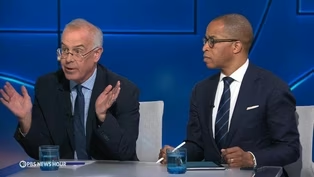
NewBrooks and Capehart on Trump struggling with fallout of war
Video has Closed Captions
Brooks and Capehart on Trump struggling to contain economic fallout of Iran war (10m 2s)
 New
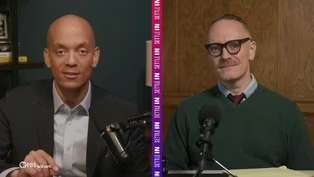
NewDavid Hill joins Geoff Bennett on 'Settle In'
Video has Closed Captions
David Hill and Geoff Bennett discuss the business of sports betting on 'Settle In' (3m 7s)
 New
NewFrustrations grow at airports as DHS shutdown strains TSA
Video has Closed Captions
Long lines, frustrations grow at airports as DHS shutdown strains TSA staffing (5m 16s)
 New
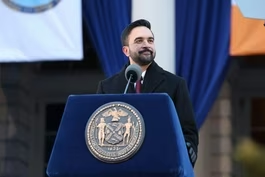
NewMamdani on his bold agenda and working with Trump
Video has Closed Captions
Zohran Mamdani on his bold agenda, tackling Islamophobia and working with Trump (11m 26s)
 New
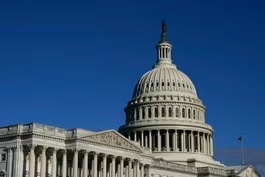
NewNews Wrap: DHS funding deadlock shows no signs of ending
Video has Closed Captions
News Wrap: Deadlock over DHS funding shows no signs of ending (5m 41s)
 New
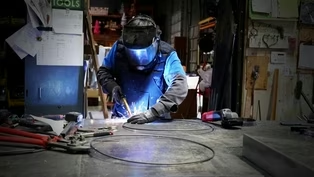
NewTrump promised a boom, but factory jobs continue to decline
Video has Closed Captions
Trump promised a manufacturing boom, but factory jobs continue to decline (9m 8s)
Providing Support for PBS.org
Learn Moreabout PBS online sponsorship
- News and Public Affairs

FRONTLINE is investigative journalism that questions, explains and changes our world.

- News and Public Affairs

Amanpour and Company features conversations with leaders and decision makers.












Support for PBS provided by:
Major corporate funding for the PBS News Hour is provided by BDO, BNSF, Consumer Cellular, American Cruise Lines, and Raymond James. Funding for the PBS NewsHour Weekend is provided by...